
Home / Hormone Health / Estradiol
Estradiol
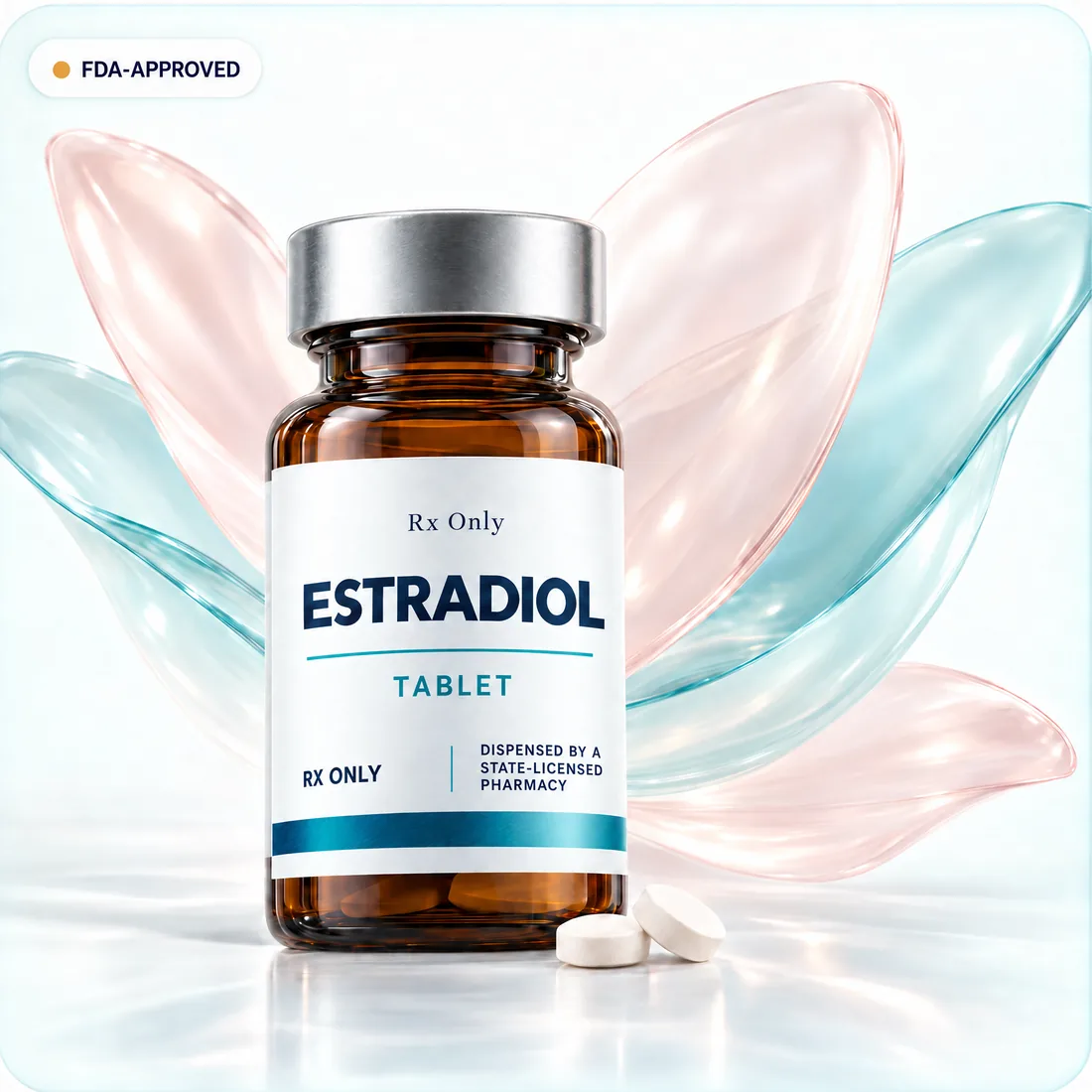
Relief from hot flashes and night sweats. Tablet or vaginal cream.
- FDA-approved
- Video visit first
- Paired with progesterone if needed
Estrogen therapy for menopause
Estradiol is the main form of estrogen your body made before menopause. It’s FDA-approved to treat hot flashes and night sweats, and can help with vaginal dryness.
- Form
- Tablet or vaginal cream
- How often
- As prescribed
- Before starting
- Video visit and labs ($89.50 HRT panel, paid to the lab)
- Status
- FDA-approved
Choose your plan
No charge unless a provider approves · Start assessment
12-month price lock · Licensed providers · Pharmacy named on every label
Quick answer
Estradiol at a glance
Estradiol is the main form of estrogen your body made before menopause.
How it’s taken: tablet or vaginal cream, as prescribed.
It starts at $69/mo at Surna, with provider care included.
A prescription from a licensed provider is required. It’s FDA-approved.
Updated
How Estradiol works
During menopause, estrogen levels drop, which can trigger hot flashes, night sweats, disrupted sleep, and vaginal dryness. Estradiol replaces some of that estrogen.
If you still have a uterus, you'll also take progesterone to protect the uterine lining.

What to expect
Everyone responds differently. Your provider checks in and adjusts your plan along the way.
Weeks 1–4
Many women notice fewer or milder hot flashes within a few weeks.
Months 2–3
Your provider checks in and may adjust your dose or form.
Ongoing
A yearly review of whether to continue, plus routine screenings like mammograms.
Is it right for you?
Your provider makes the final call after reviewing your health history and labs.
Often a good fit
- Hot flashes or night sweats from menopause
- Under 60 or within about 10 years of menopause
- No history of the conditions listed here
Usually not a fit
- Breast cancer or another estrogen-sensitive cancer
- History of blood clots, stroke, or heart attack
- Unexplained vaginal bleeding
- Liver disease
- Pregnancy
Not a complete list. Tell your provider about all health conditions and medications.
Possible side effects
Most side effects are mild. Your care team is a message away if something doesn't feel right.
More common
Get medical help right away for
- Unusual vaginal bleeding
- Chest pain, shortness of breath, or pain and swelling in a leg
- Sudden severe headache, vision changes, or trouble speaking
- A new breast lump
For a medical emergency, call 911.
How to take it
Always follow the directions on your label and from your provider.
Use your prescribed form
Take tablets at the same time each day. Apply vaginal cream with the applicator as your label directs.
Pair with progesterone if prescribed
If you have a uterus, take progesterone as directed.
Keep up with screenings
Stay current on mammograms and your yearly review.
Estradiol questions
Tablet or vaginal cream?
The tablet treats whole-body symptoms like hot flashes and night sweats. Vaginal cream treats vaginal dryness and discomfort, with effects mostly where it’s applied. Your provider will help you choose.
How long can I stay on it?
There is no single cutoff. You and your provider review the benefits and risks at least once a year.
Is estradiol bioidentical?
Estradiol is chemically identical to the estrogen your body makes. FDA-approved estradiol products are tested for consistent dosing.
Related treatments



See if Estradiol is right for you.
Answer a few questions and a licensed provider will review your options.
Important safety information
Last updated
Estrogen therapy increases the risk of endometrial cancer in women with a uterus who do not also take a progestogen. Estrogen, alone or with progestins, may increase the risk of heart attack, stroke, blood clots, breast cancer, and probable dementia. Use the lowest effective dose for your goals, and review treatment with your provider regularly. Report unusual vaginal bleeding right away.
This is not a complete list of risks. Talk with your provider and read the full prescribing information or medication guide.