
Home / Hair Regrowth / Topical Finasteride + Minoxidil
Topical Finasteride + Minoxidil
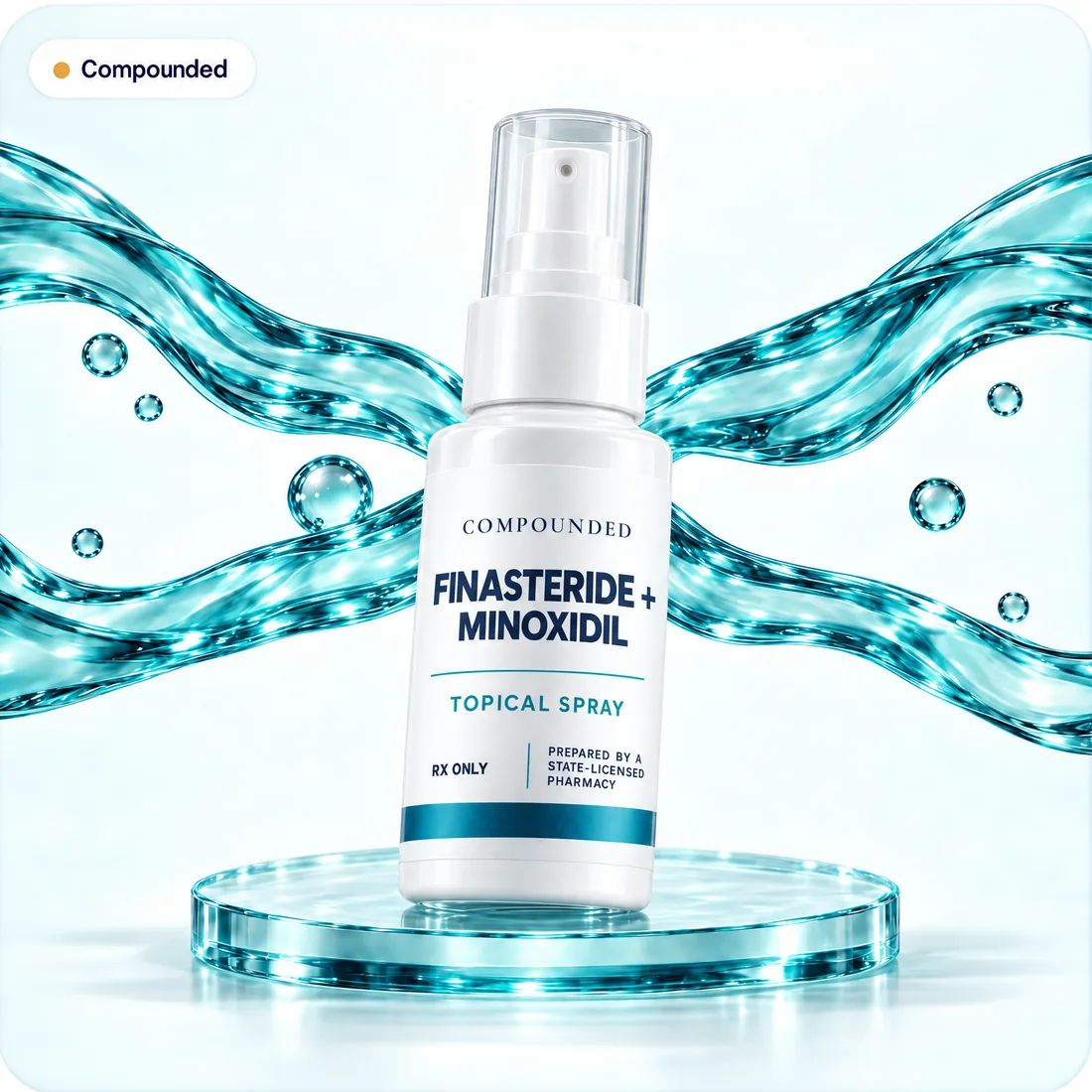
Two ingredients, one scalp spray. No pills.
- Finasteride + minoxidil
- Applied daily
- Pharmacy on your label
Compounded scalp spray
Finasteride and minoxidil combined in one spray you apply to your scalp. A good option for men who'd rather not take a pill.
- Form
- Scalp spray
- How often
- Daily, as directed
- Results
- 3 to 12 months
- Made by
- State-licensed compounding pharmacy
Choose your plan
No charge unless a provider approves · Start assessment
12-month price lock · Licensed providers · Pharmacy named on every label
Quick answer
Topical Finasteride + Minoxidil at a glance
Finasteride and minoxidil combined in one spray you apply to your scalp.
How it’s taken: scalp spray, daily, as directed.
It starts at $59/mo at Surna, with provider care included.
A prescription from a licensed provider is required. It’s compounded by a state-licensed pharmacy and is not FDA-approved.
Updated
How Topical Finasteride + Minoxidil works
Finasteride lowers DHT, the hormone behind pattern hair loss. Minoxidil helps extend the hair growth phase and supports blood flow to follicles.
Applying finasteride to the scalp targets where it’s needed, but some is still absorbed into the body, so sexual side effects remain possible.

What to expect
Everyone responds differently. Your provider checks in and adjusts your plan along the way.
Months 1–2
Temporary shedding can happen as minoxidil pushes out resting hairs.
Months 3–6
Many men notice less shedding and early regrowth.
Month 12
Full results become clearer. Gains usually reverse after stopping.
Is it right for you?
Your provider makes the final call after reviewing your health history.
Often a good fit
- Men who'd rather not take a pill
- Concerned about side effects from oral finasteride
- Thinning at the crown or hairline
Usually not a fit
- Women who are pregnant or could become pregnant
- Scalp irritation, sunburn, or broken skin
- Heart conditions, unless your provider approves
Not a complete list. Tell your provider about all health conditions and medications.
Possible side effects
Most side effects are mild. Your care team is a message away if something doesn't feel right.
More common
Get medical help right away for
- Chest pain or a fast heartbeat
- Dizziness or fainting
- Sudden swelling or rapid weight gain
For a medical emergency, call 911.
How to take it
Always follow the directions on your label and from your provider.
Apply to a dry scalp
Part your hair and spray directly on thinning areas, then spread gently with your fingertips.
Wash your hands
Avoid contact with women and children until the spray has dried.
Let it dry
Wait until it’s dry before styling, wearing a hat, or going to bed.
Topical Finasteride + Minoxidil questions
Spray or pill: which works better?
Both approaches can work. Your provider considers your side effect concerns and preferences.
What happens if I stop?
Hair gains usually reverse within months of stopping.
Is the spray FDA-approved?
No. It is compounded by a state-licensed pharmacy. Compounded medications are not FDA-approved or reviewed by the FDA for safety, effectiveness, or quality.
Related treatments



See if Topical Finasteride + Minoxidil is right for you.
Answer a few questions and a licensed provider will review your options.
Important safety information
Last updated
Topical finasteride can be absorbed into the body and may cause sexual side effects. Women who are or may become pregnant should avoid contact with the spray and treated skin. Minoxidil can cause scalp irritation and unwanted hair growth; stop and contact your provider if you have chest pain, a fast heartbeat, fainting, or sudden swelling.
Compounded medication, prepared by a state-licensed pharmacy for individual patients. Compounded drugs are not FDA-approved, and the FDA does not review them for safety, effectiveness or quality. Prescribed only if your provider determines it is clinically appropriate for you.
This is not a complete list of risks. Talk with your provider and read the full prescribing information or medication guide.