
Home / Anti-Aging & Longevity / Glutathione
Glutathione
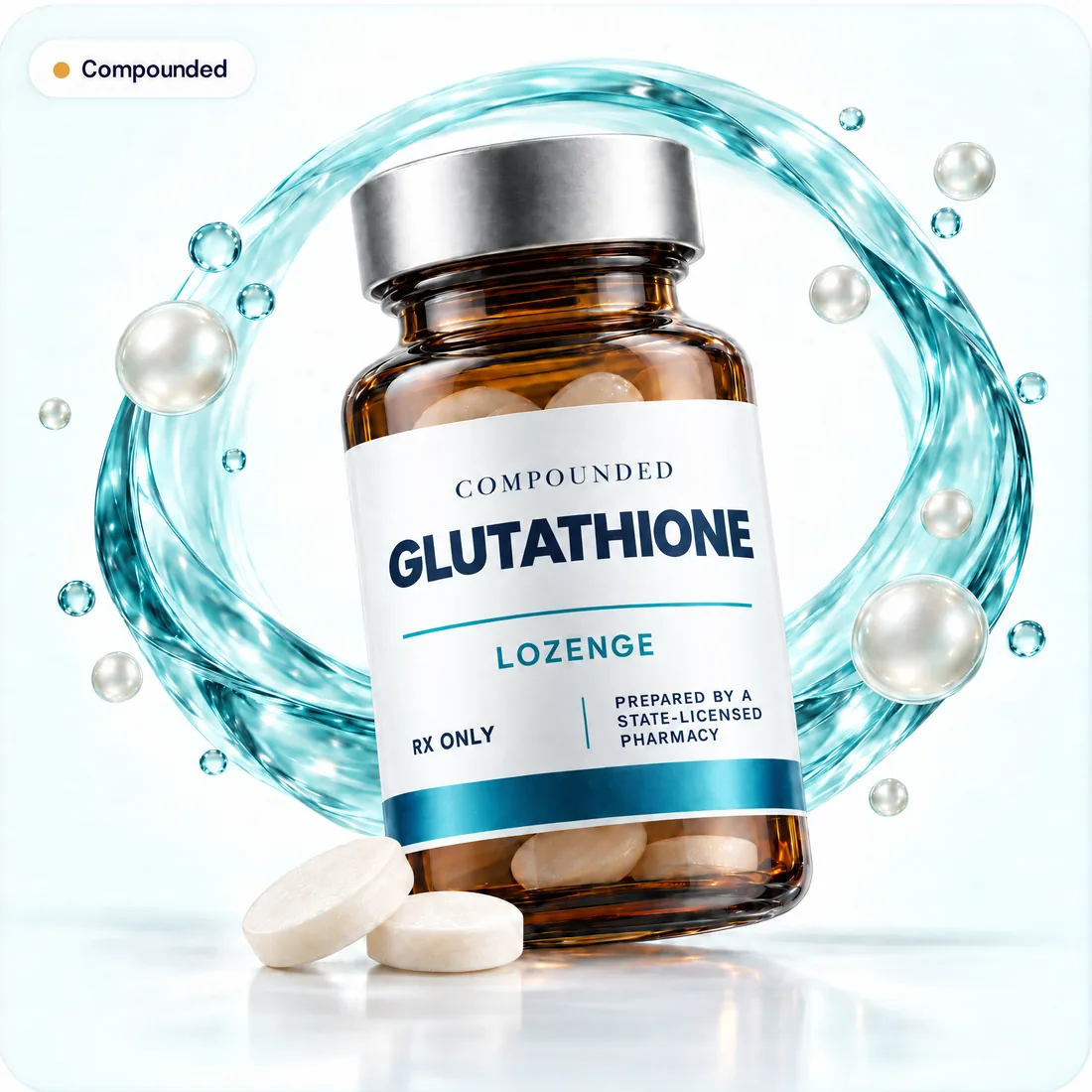
An antioxidant your body already makes. Dissolving lozenge.
- Needle-free
- Taken as directed
- Pharmacy on your label
Compounded antioxidant lozenge
Glutathione is an antioxidant your body makes naturally from amino acids. Here it comes in a lozenge that dissolves in your mouth. Individual results vary.
- Form
- Lozenge
- How often
- As directed on your label
- Needles
- None
- Made by
- State-licensed compounding pharmacy
Choose your plan
No charge unless a provider approves · Start assessment
12-month price lock · Licensed providers · Pharmacy named on every label
Quick answer
Glutathione at a glance
Glutathione is an antioxidant your body makes naturally from amino acids.
How it’s taken: lozenge, as directed on your label.
It starts at $119/mo at Surna, with provider care included.
A prescription from a licensed provider is required. It’s compounded by a state-licensed pharmacy and is not FDA-approved.
Updated
How Glutathione works
Glutathione helps protect your cells from oxidative stress, the everyday wear and tear from metabolism, exercise, and your environment. Levels can dip with age, stress, and illness.
Swallowed capsules are largely broken down during digestion. A lozenge dissolves slowly in your mouth instead.

What to expect
Everyone responds differently. Your provider checks in and adjusts your plan along the way.
First weeks
Your provider will review benefits and risks with you. Some people notice a mild taste or stomach upset.
Weeks 2–6
Your provider checks in and adjusts how often you take it.
Ongoing
Glutathione is typically part of a broader wellness plan.
Is it right for you?
Your provider makes the final call after reviewing your health history.
Often a good fit
- Active people who want to support recovery
- People looking for antioxidant support as part of a wellness plan
- People who want a needle-free option
Usually not a fit
- Pregnant or breastfeeding
- Allergy to any ingredient
- Asthma, unless your provider approves
Not a complete list. Tell your provider about all health conditions and medications.
Possible side effects
Most side effects are mild. Your care team is a message away if something doesn't feel right.
More common
Get medical help right away for
- Signs of an allergic reaction, like hives, swelling of your face or throat, or trouble breathing
- Wheezing or trouble breathing
For a medical emergency, call 911.
How to take it
Always follow the directions on your label and from your provider.
Let it dissolve
Place the lozenge between your cheek and gum and let it dissolve. Don’t chew or swallow it whole.
Wait to eat or drink
Follow the timing on your label before eating or drinking.
Store it properly
Keep it in a cool, dry place as your label directs.
Glutathione questions
Will glutathione lighten my skin?
No, and we don't prescribe it for that. The FDA has warned against products marketed for skin lightening.
Why a lozenge instead of a supplement capsule?
Capsules pass through your digestive system, where much of the glutathione is broken down. A lozenge dissolves in your mouth instead.
Is glutathione FDA-approved?
No. It is compounded by a state-licensed pharmacy. Compounded medications are not FDA-approved or reviewed by the FDA for safety, effectiveness, or quality.
Related treatments




See if Glutathione is right for you.
Answer a few questions and a licensed provider will review your options.
Important safety information
Last updated
Glutathione can cause stomach upset and, rarely, allergic reactions. Tell your provider if you have asthma or are pregnant or breastfeeding. Glutathione is not prescribed for skin lightening. Seek emergency care for signs of a serious allergic reaction.
Compounded medication, prepared by a state-licensed pharmacy for individual patients. Compounded drugs are not FDA-approved, and the FDA does not review them for safety, effectiveness or quality. Prescribed only if your provider determines it is clinically appropriate for you.
This is not a complete list of risks. Talk with your provider and read the full prescribing information or medication guide.