
Home / Anti-Aging & Longevity / NAD+ Injection
NAD+ Injection
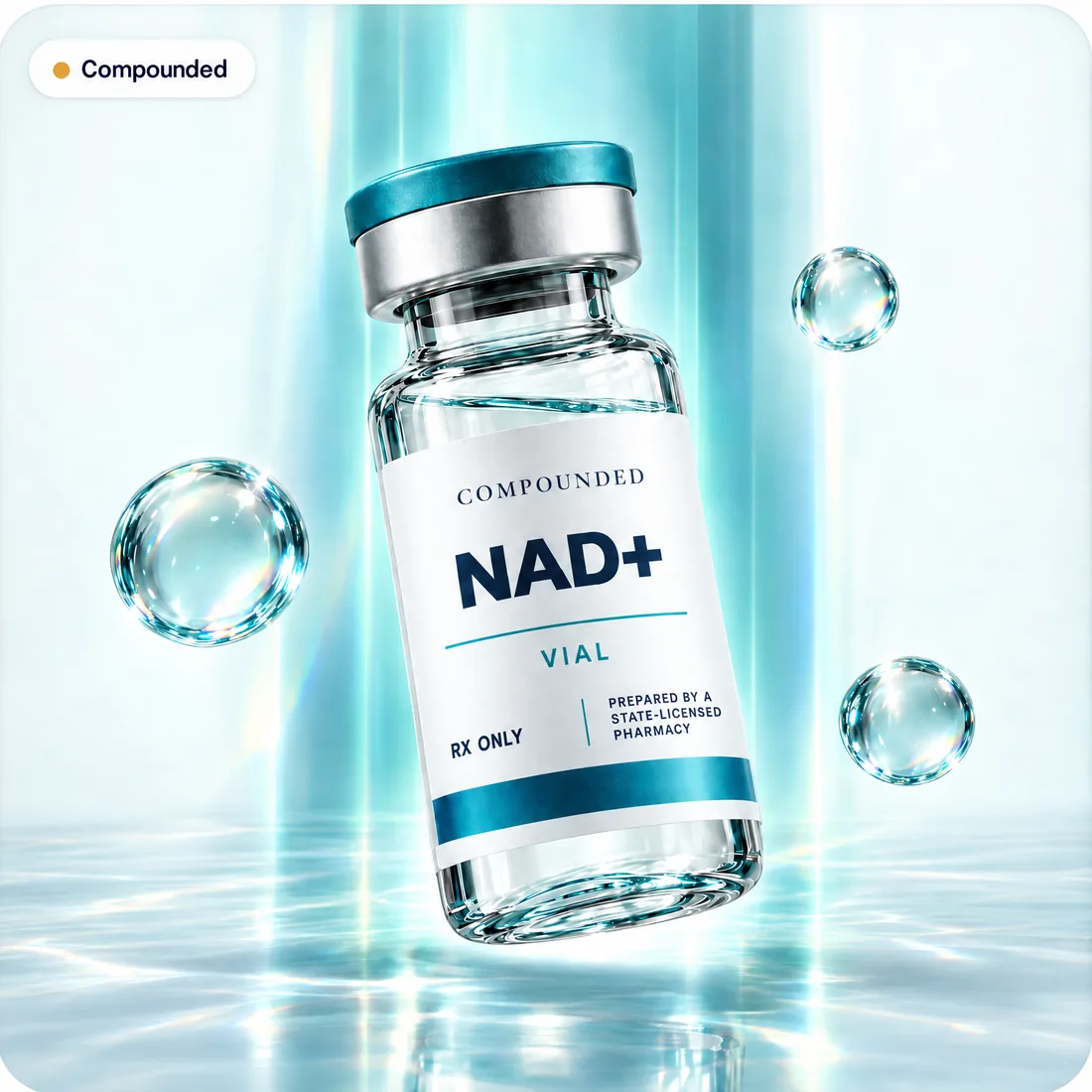
NAD+, a coenzyme involved in how cells produce energy. At-home injection.
- 1,000 mg per month
- No IV lounge needed
- Pharmacy on your label
Compounded nicotinamide adenine dinucleotide
NAD+ is a coenzyme found in every cell that helps turn food into energy. Individual results vary.
- Form
- Injection under the skin
- Supply
- 1,000 mg per month
- Where
- At home, no IV lounge
- Made by
- State-licensed compounding pharmacy
Choose your plan
No charge unless a provider approves · Start assessment
12-month price lock · Licensed providers · Pharmacy named on every label
Quick answer
NAD+ Injection at a glance
NAD+ is a coenzyme found in every cell that helps turn food into energy.
How it’s taken: injection under the skin.
It starts at $119/mo at Surna, with provider care included.
A prescription from a licensed provider is required. It’s compounded by a state-licensed pharmacy and is not FDA-approved.
Updated
How NAD+ Injection works
Your cells use NAD+ to power metabolism and cellular repair, and levels naturally decline with age.
Injecting under the skin at home is a lower-effort alternative to hour-long IV drips. Your provider sets a dose and schedule, often starting low.

What to expect
Everyone responds differently. Your provider checks in and adjusts your plan along the way.
First injections
A warm flush, mild nausea, or stomach cramping is common, especially at higher doses. Starting low helps.
Weeks 2–4
Your provider adjusts your dose and schedule based on how you feel.
Ongoing
Regular check-ins keep your plan working around your routine.
Is it right for you?
Your provider makes the final call after reviewing your health history.
Often a good fit
- People looking to support daily energy and focus
- Comfortable giving themselves a small injection
- Looking for an at-home alternative to IV drips
Usually not a fit
- Pregnant or breastfeeding
- Currently in cancer treatment, unless your oncologist approves
- Allergy to any ingredient
Not a complete list. Tell your provider about all health conditions and medications.
Possible side effects
Most side effects are mild. Your care team is a message away if something doesn't feel right.
More common
Get medical help right away for
- Signs of an allergic reaction, like hives, swelling of your face or throat, or trouble breathing
- Chest tightness or a racing heartbeat
For a medical emergency, call 911.
How to take it
Always follow the directions on your label and from your provider.
Inject slowly
Inject under the skin of your belly or thigh. Going slowly helps reduce flushing and cramping.
Rotate spots
Change where you inject each time.
Store it properly
Follow the storage directions on your label. NAD+ usually needs to be refrigerated.
NAD+ Injection questions
Injection or nasal spray?
Injections deliver a larger dose less often. The spray is needle-free and used daily. Your provider can help you choose.
Why does it make me flush?
Flushing and stomach discomfort are common, especially at higher doses or when injected quickly. Injecting slowly and starting low usually helps.
Is NAD+ FDA-approved?
No. It is compounded by a state-licensed pharmacy. Compounded medications are not FDA-approved or reviewed by the FDA for safety, effectiveness, or quality.
Related treatments




See if NAD+ Injection is right for you.
Answer a few questions and a licensed provider will review your options.
Important safety information
Last updated
NAD+ injections can cause flushing, nausea, cramping, headache, and injection site reactions. Tell your provider if you are pregnant, breastfeeding, or being treated for cancer. Seek emergency care for signs of a serious allergic reaction.
Compounded medication, prepared by a state-licensed pharmacy for individual patients. Compounded drugs are not FDA-approved, and the FDA does not review them for safety, effectiveness or quality. Prescribed only if your provider determines it is clinically appropriate for you.
This is not a complete list of risks. Talk with your provider and read the full prescribing information or medication guide.