
Home / Hormone Health / Testosterone Cream
Testosterone Cream
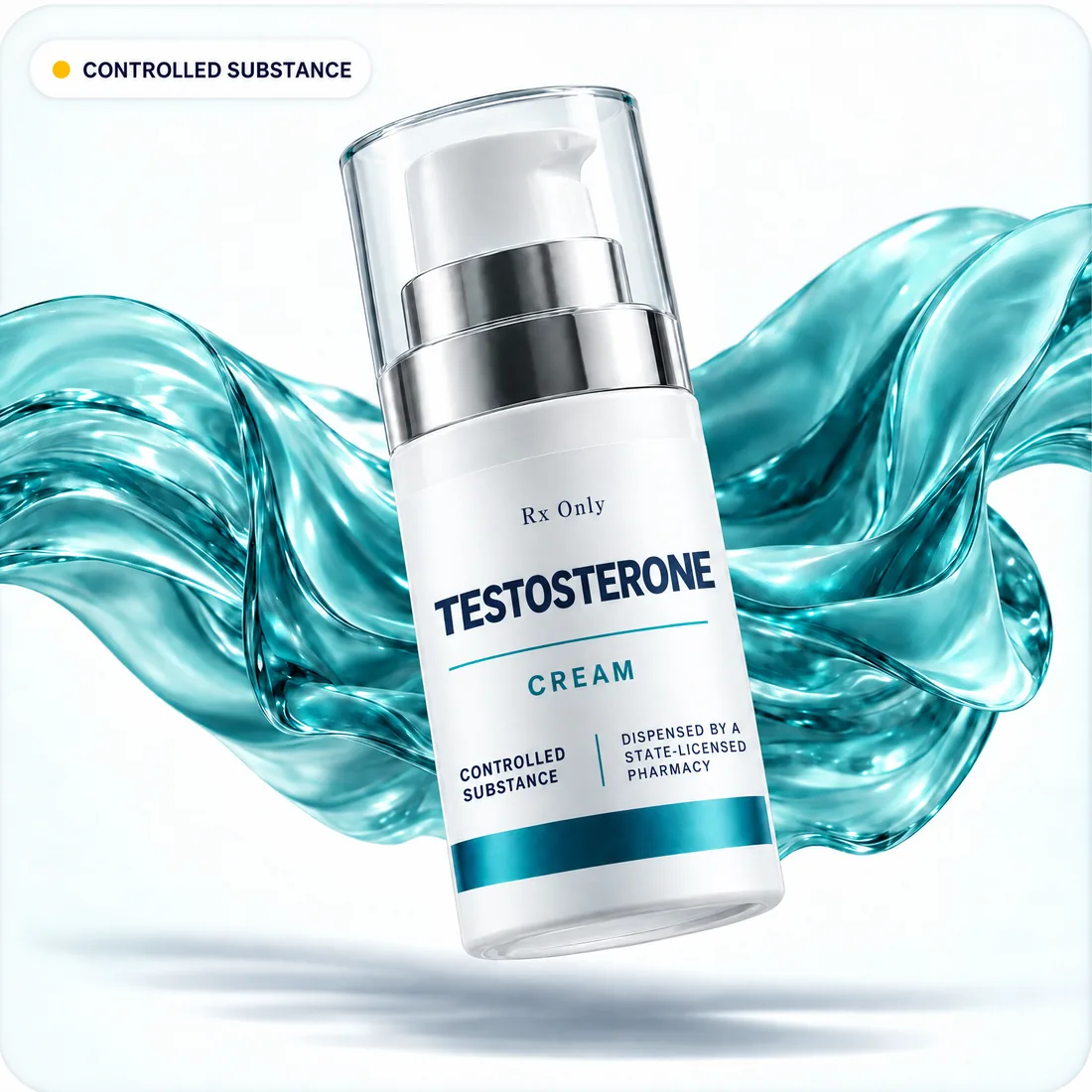
Testosterone. Prescribed after a provider review.
Hormone Health
Compounded testosterone as a daily topical instead of an injection.
- Form
- Topical cream, daily; 200 mg/mL, 30 g tube
- Labs
- Required; $88.25 TRT panel, paid to the lab
- Schedule
- Controlled substance
- Licensed providers
- Pharmacy named on every label
- 12-month price lock
Quick answer
Testosterone Cream at a glance
Testosterone cream is applied to thin-skinned areas (inner wrist, inner arm, or scrotum for maximum absorption) once daily.
How it’s taken: topical cream, daily.
Bloodwork is required before and during treatment.
A prescription from a licensed provider is required.
Updated
How Testosterone Cream works
Testosterone cream is applied to thin-skinned areas (inner wrist, inner arm, or scrotum for maximum absorption) once daily.
It absorbs through your skin and raises your testosterone levels throughout the day.
It's a great option if you're needle-averse or prefer a daily routine over a weekly injection.
Scrotal application produces the highest absorption and is often preferred for this reason.

What you are actually being prescribed
Testosterone is a Schedule III controlled substance. Federal rules require a synchronous consultation before it is prescribed, and it is dispensed by a DEA-registered pharmacy. At SurnaHealth that consultation is a live video visit with a licensed provider, with baseline labs. We do not work around that, and you should be wary of anyone offering to.
A Schedule III controlled substance
That is a legal classification, not a marketing one. It changes how it is prescribed, dispensed and monitored.
A live video visit is required
Federal rules require a synchronous consultation before a controlled substance is prescribed. You book a video visit with a licensed provider when you submit your intake, and they read your baseline labs. A written intake alone is not enough.
Blood work before and during
Baseline labs, then ongoing monitoring your provider specifies. Hormone therapy without bloodwork is guesswork.
Transfer is a real risk
Topical testosterone can transfer to another person by skin contact. Your provider will tell you how to apply it and what to avoid.
Testosterone Cream questions
Is the cream as effective as injections?
For most people, yes — especially with scrotal application. Some men absorb it less efficiently through skin, which is why bloodwork is important to confirm your levels are actually rising.
Can my partner or children accidentally absorb it?
Yes — avoid skin-to-skin contact with the application area until it's fully absorbed (about 2 hours). Your provider will give you full safety instructions.

See if Testosterone Cream is right for you.
Answer a few questions and a licensed provider will review your options.
Start your assessmentImportant safety information
Last updated
Testosterone is a Schedule III controlled substance.
Prescribing it is subject to DEA telemedicine rules and state controlled-substance requirements in addition to ordinary standards of care.
Compounded hormone preparations, including compounded testosterone, Biest, progesterone and thyroid preparations, are not FDA-approved drug products.
Estriol is not a component of any FDA-approved drug.
Testosterone therapy requires baseline and ongoing laboratory monitoring.
Your provider determines what testing is required and when.
Reported risks include erythrocytosis, effects on fertility and spermatogenesis, worsening of sleep apnoea, acne, and cardiovascular considerations your provider will review against your history.
Not appropriate in pregnancy, in anyone who is or may become pregnant, or where a provider identifies a contraindication such as active prostate or breast malignancy.
FDA has raised concerns specifically about marketing compounded hormone preparations as safer or more natural than approved products.
We do not make that claim and you should be sceptical of anyone who does.
Compounded medication, prepared by a state-licensed pharmacy for individual patients. Compounded drugs are not FDA-approved, and the FDA does not review them for safety, effectiveness or quality. Prescribed only if your provider determines it is clinically appropriate for you.
This is not a complete list of risks. Talk with your provider and read the full prescribing information or medication guide.