
Home / Weight Loss / Tirzepatide
Tirzepatide
Two appetite hormones. One plan. Shot or tablet.
- Acts on GLP-1 and GIP
- Dose rises gradually
- Pharmacy on your label
Compounded GLP-1 + GIP · injection or dissolving tablet
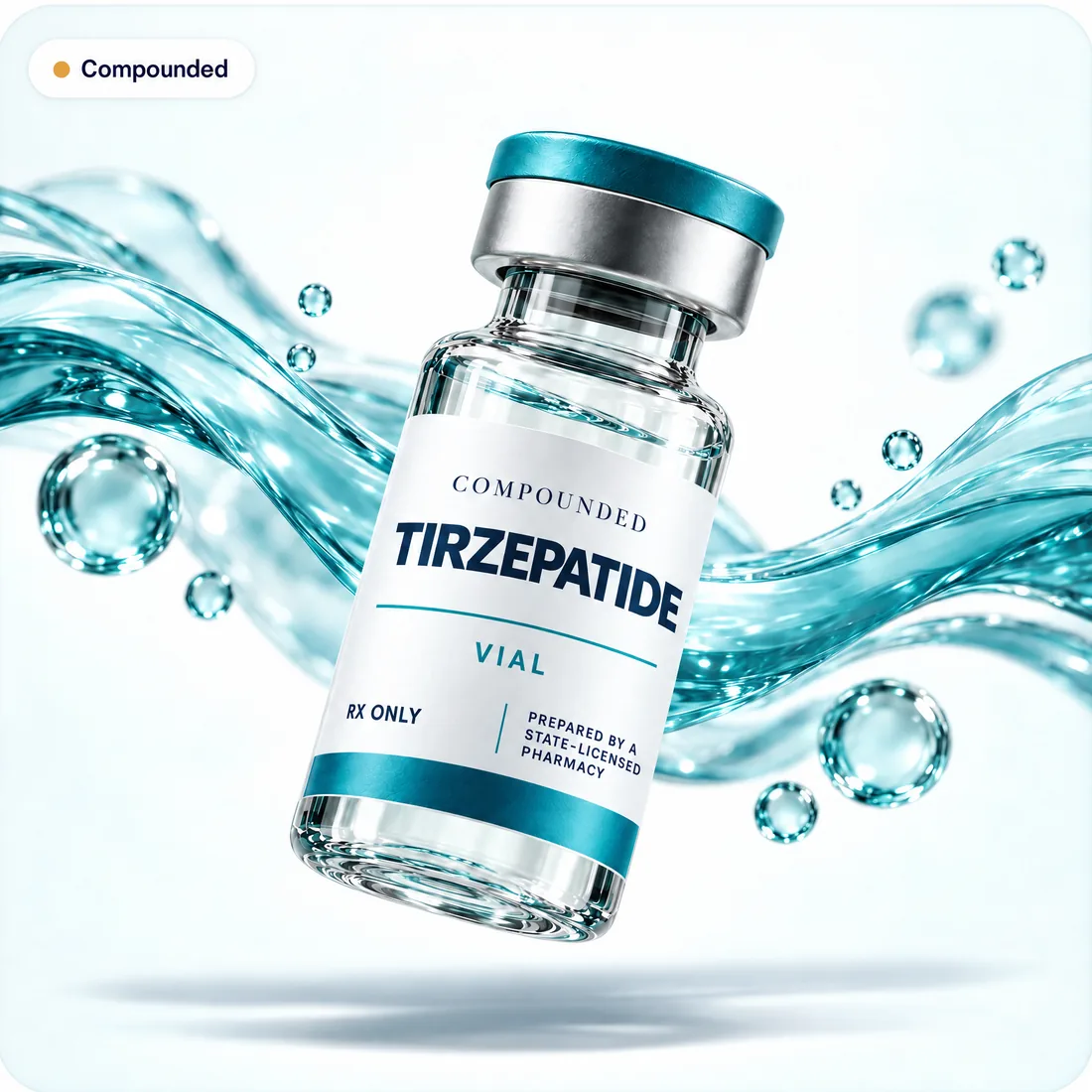
Tirzepatide works on two appetite hormones, GLP-1 and GIP, instead of one. It’s often considered for people who want a different option or didn’t get enough from semaglutide.
- Form
- Injection or dissolving tablet
- How often
- Weekly shot or daily tablet
- Dosing
- Starts low, increases gradually
- Made by
- State-licensed compounding pharmacy
Choose your plan
No charge unless a provider approves · Start assessment
12-month price lock · Licensed providers · Pharmacy named on every label
Quick answer
Tirzepatide at a glance
Tirzepatide works on two appetite hormones, GLP-1 and GIP, instead of one.
How it’s taken: injection or dissolving tablet, weekly shot or daily tablet.
It starts at $139/mo at Surna, with provider care included.
A prescription from a licensed provider is required. It’s compounded by a state-licensed pharmacy and is not FDA-approved.
Compare: Semaglutide vs. tirzepatide · Injection vs. tablet
Updated
How Tirzepatide works
GLP-1 and GIP are hormones your gut releases after meals. Together they signal fullness, slow digestion, and help regulate blood sugar. Tirzepatide activates both.
Like other GLP-1 medications, your dose starts low and increases every few weeks so your body can adjust.

What to expect
Everyone responds differently. Your provider checks in and adjusts your plan along the way.
Weeks 1–4
Starting dose. Many people notice less interest in food. Mild nausea is common while your body adjusts.
Months 2–3
Your dose increases as tolerated, and appetite changes usually become more noticeable.
Months 4+
Your provider adjusts toward a maintenance dose based on your progress and side effects.
Is it right for you?
Your provider makes the final call after reviewing your health history.
Often a good fit
- Adults with a BMI of 30 or higher
- Adults with a BMI of 27 or higher plus a weight-related condition
- People whose progress stalled on semaglutide
Usually not a fit
- Personal or family history of medullary thyroid cancer or MEN 2
- Pregnant, planning pregnancy, or breastfeeding
- History of pancreatitis
- Type 1 diabetes
Not a complete list. Tell your provider about all health conditions and medications.
Possible side effects
Most side effects are mild. Your care team is a message away if something doesn't feel right.
More common
Get medical help right away for
- Severe stomach pain that won't go away, with or without vomiting
- A lump or swelling in your neck, trouble swallowing, or hoarseness
- Pain in your upper right belly, fever, or yellowing skin or eyes
- Signs of an allergic reaction, like swelling of your face or trouble breathing
For a medical emergency, call 911.
How to take it
Always follow the directions on your label and from your provider.
Injection: pick your day
Inject once a week on the same day, under the skin of your belly, thigh, or upper arm, rotating spots.
Tablet: let it dissolve
Place the tablet in your mouth and let it dissolve fully, following the timing on your label.
Store it properly
Follow the storage directions on your label. Injectables usually need to be refrigerated.
Tirzepatide questions
How is tirzepatide different from semaglutide?
Semaglutide acts on one hormone, GLP-1. Tirzepatide acts on two, GLP-1 and GIP. Your provider can help decide which fits your history and goals.
Can I switch from semaglutide?
Often, yes. Your provider will choose a starting dose based on where you are now and how you tolerated semaglutide.
How is compounded tirzepatide different from Zepbound®?
Zepbound® is FDA-approved. Compounded tirzepatide is prepared by a state-licensed pharmacy and is not FDA-approved or reviewed by the FDA for safety, effectiveness, or quality. They are not the same product.
Related treatments




See if Tirzepatide is right for you.
Answer a few questions and a licensed provider will review your options.
Important safety information
Last updated
GLP-1 medications may cause thyroid C-cell tumors, including medullary thyroid carcinoma, based on studies in rodents; it is unknown whether this happens in people. Do not use if you or a family member has had medullary thyroid carcinoma or if you have MEN 2. Other serious risks include pancreatitis, gallbladder problems, low blood sugar when used with other diabetes medicines, kidney problems from dehydration, serious allergic reactions, increased heart rate, and changes in vision for people with diabetic retinopathy. Watch for changes in mood or thoughts of self-harm and tell your provider right away.
Compounded medication, prepared by a state-licensed pharmacy for individual patients. Compounded drugs are not FDA-approved, and the FDA does not review them for safety, effectiveness or quality. Prescribed only if your provider determines it is clinically appropriate for you.
This is not a complete list of risks. Talk with your provider and read the full prescribing information or medication guide.